Decoding the Map: Discovering Europe’s Hidden Gems via Computer Vision
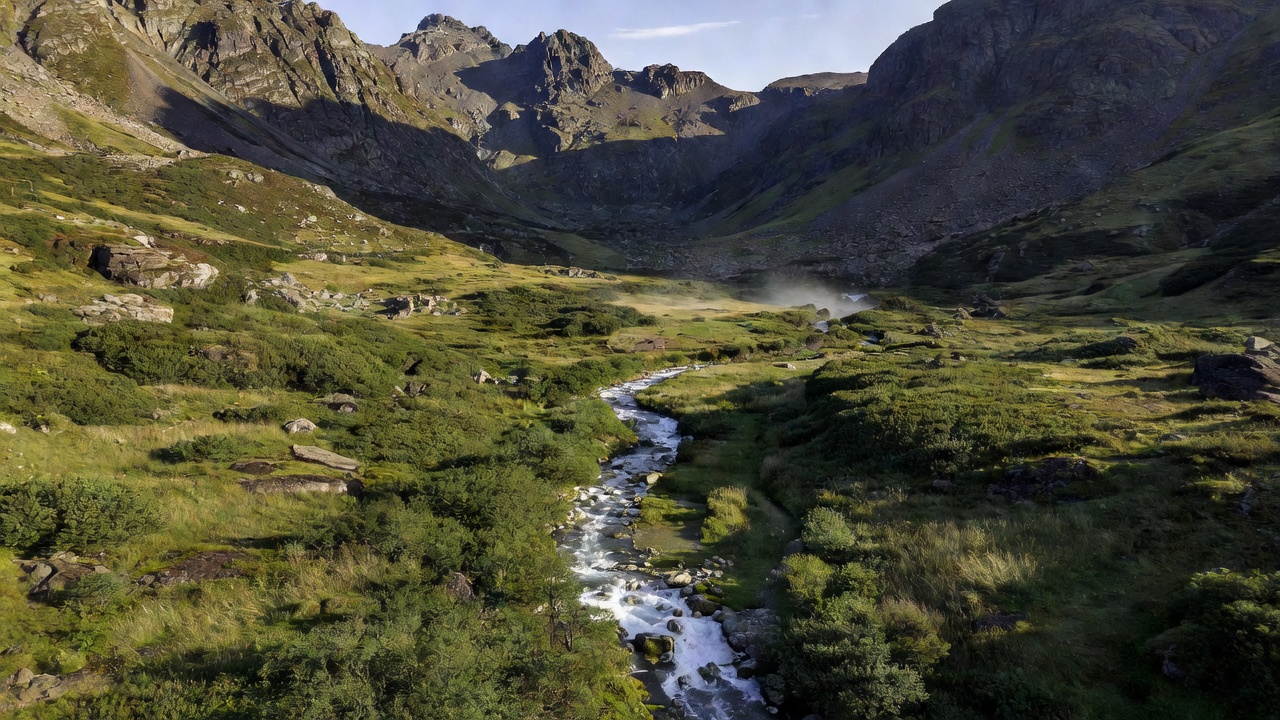
The European continent has historically been one of the most thoroughly mapped, traversed, and documented landmasses on the planet. From the sun-baked coastlines of the Mediterranean to the deep alpine valleys, finding a corner free from the influence of mass tourism feels increasingly impossible. However, the limitation isn't a lack of space—it is a lack of imaginative mapping. Human travel agents and traditional guidebooks inherently follow established, well-trodden logistical routes. At Fizzorajollystck, we deploy advanced machine learning models against raw geospatial data to locate regions that are visually striking, culturally rich, and completely absent from standard travel itineraries.
The Mechanism: Inverting the Social Media Heatmap
Our foundational process relies on what we call "negative space mapping." Traditional travel tech aggregates social media check-ins, geotagged photographs, and hospitality APIs to highlight where people *are* going. Our algorithms ingest this exact same dataset but flip the objective function: we look for areas characterized by extremely low digital density.
Once these "cold spots" are identified, our pipeline passes coordinate bounding boxes into computer vision models trained on satellite imagery from open-access aerospace databases (like those provided by the European Space Agency). These models analyze topographic complexity, vegetation indexes, and proximity to water bodies, looking for aesthetic profiles that match highly desirable locations without the associated human footprint.
Pros and Cons of Algorithmic Curation
Traveling to a destination determined by satellite data analysis offers a starkly different experience than booking a mainstream resort. It requires a specific type of traveler.
- Pros: Absolute serenity, genuine interactions with locals unaccustomed to tourists, environmental preservation, and a true sense of exploration.
- Cons: A lack of standardized tourism infrastructure, potential language barriers (as English is less commonly spoken outside tourist hubs), and longer, more complex transit requirements.
Evaluating Topography and Infrastructure
A beautiful location is useless if it is entirely inaccessible. Our secondary layer of analysis evaluates infrastructure density. The system cross-references rural road networks, regional rail timetables, and topographic barriers. The ideal hidden gem sits in a "Goldilocks zone": difficult enough to reach that casual tourists won't bother, but accessible enough that an intrepid traveler can arrive via a rental car or regional train.
For example, instead of routing users to the heavily congested Amalfi Coast, our models frequently highlight the rugged, tertiary coastal roads of the eastern Adriatic or specific, unmapped inland archipelagos of northern lakes. The visual payoff is mathematically comparable, based on elevation drop and coastline complexity, while the density of international arrivals drops by over 95%.
Redefining "Worth Seeing"
Traditional travel relies on established canon—the Eiffel Tower, the Colosseum, the Swiss Alps. Algorithmic discovery strips away the historical bias of what is "important" and replaces it with objective spatial and visual metrics. By stripping away narrative bias, the AI frequently highlights abandoned medieval villages undergoing slow natural reclamation, or sweeping glacial valleys previously deemed too economically unviable for ski resort development.
Ultimately, utilizing AI to find hidden gems in Europe is not just about avoiding crowds; it is an active rebellion against the commodification of travel. It relies on cold, hard data to return us to the most human of experiences: stepping into the unknown.